
Gift Cards are in growth – Are you?


Hospitality’s fastest-growing revenue channel is also the one most operators set up once and forget. Here’s how to think about the opportunity you’re sitting on.
By Andre JOHNSTONE from Upside, for Toggle
The set-and-forget trap
Congratulations, you have a gift card shop. A few years ago only a few hospitality operators had one. We’ve come a long way... But, if you don’t talk about gift card sales regularly and don’t update the shop and look for new opportunities you are missing out. If that’s you, you’re not alone. Most shops I look at have a couple of cards loaded up (maybe a £10 and a £20 card), the website has a link in the footer.. but that’s it. You sell some at Black Friday when there is an offer on, a few at Christmas but nothing to write home about for the rest of the year.
That’s not a gift card programme. That’s a vending machine you forgot you owned.
And the timing makes it worse, because this is the channel that’s actually growing, and boy do we need some growth right now. F&B gift card sales were up around 40% in 2025. Sixty-three percent of recipients were new to the brand they received, and more than a fifth go on to become regulars (That sounds like a pretty decent Loyalty programme!).
Gift cards are a high-margin, cash-upfront, customer-acquisition product but it’s only doing a fraction of what it could. Here’s how to think about it instead.
1. It’s a channel, not a checkbox.
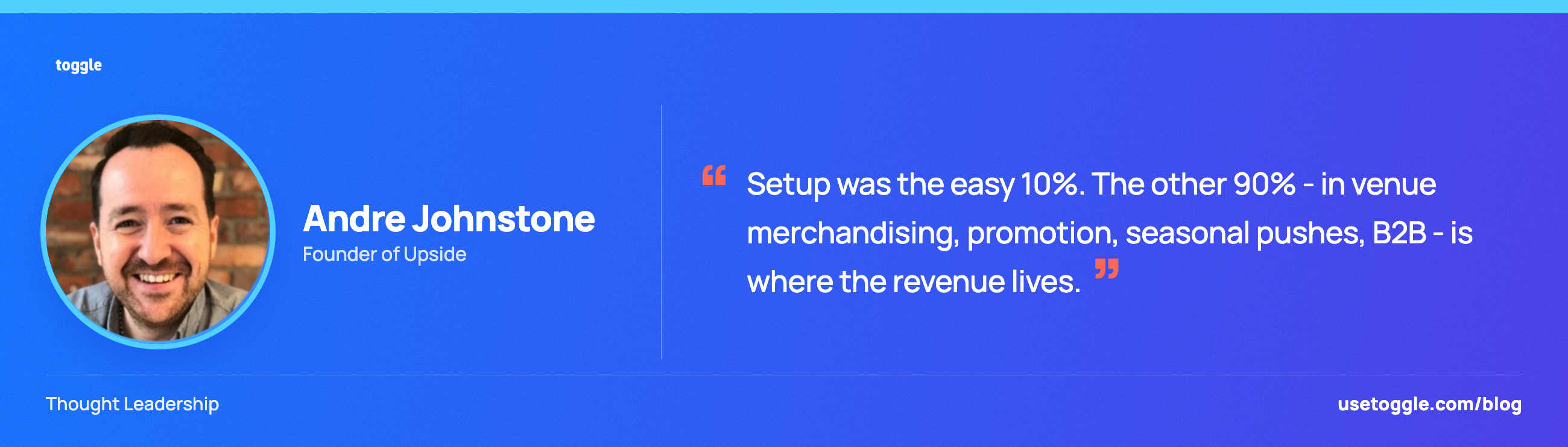
You wouldn’t launch delivery and never look at the tablet again. Your gift card shop deserves the same seriousness: an owner, a target, and a slot in the marketing calendar. Setup was the easy 10%. The other 90% - in venue merchandising, promotion, seasonal pushes, B2B - is where the revenue lives, and it only happens when someone is accountable for it.
2. Stop chasing breakage. Chase the multiplier.
Plenty of operators celebrate breakage - the cards that never get redeemed - as free margin. No table turned, no kitchen used; it feels like pure profit. It’s also short-term thinking. In hospitality, people almost never spend exactly the card value: they buy more because the card feels like free money and they want to treat themselves. Average redemption runs around 50% above face value, so a £50 card generates roughly £75 of real spend - often from a guest who is brand new to you. That’s not breakage to celebrate; that’s acquisition to encourage. Redemption is the goal, not the cost.
3. The big prize is B2B.
Here’s the number most operators haven’t clocked: around 61% of all gift card revenue now comes through B2B - corporate gifting, employee rewards, loyalty and incentive programmes. Yet most hospitality businesses leave B2B entirely to chance: the sales team get an order from a corporate but they don’t talk about bulk purchases, no partnering with agencies that can open up revenue by adding presence in the platforms where the corporate buyers actually spend. B2B demand is growing fast and it gets better year after year. The brands that get into reward and benefit platforms now will lock in volume before their competitors wake up. This is where the step-change in numbers comes from.
4. Sell experiences, not cash.
“£10 or £20” is a price list, not a range. People don’t gift money; they gift occasions and feelings. Build around them: a chef’s table, a bottomless brunch for two, a Valentine’s dinner, a “thank you,” a festive bundle. Be ready for Black Friday and Christmas, of course - but add all-year-round occasions so you’re not staring at eleven quiet months and one frantic one. And remember self-purchase is now roughly a third of gift card buying: plenty of people will buy an experience for themselves, if you give them one worth buying.
5. Have a redemption strategy.
Once you accept that redemption (not breakage) is the win, the follow-through is obvious, and almost nobody does it. Send reminder emails before cards expire. Offer short extensions rather than letting value lapse. Connect your CRM so you know which recipients are new, VIP or lapsed, and market to each accordingly. Done well, every gift card becomes a reason for a new guest to come back a second and a third time.
6. Let’s get Physical
Many customers still like to give a physical card – but for many operators the MOQs and lead-times become prohibitive. There are ways around this. Toggle have created greetings cards with built-in-pop-out gift cards in that your customers can print on demand using off the shelf or bespoke designs. It’s an easy way to add physical cards to your shop and will usually drive incremental revenue.
The opportunity is already built
Here’s the good news buried in all of this: you don’t need to build anything new. The shop exists. The plumbing works. The opportunity isn’t more setup - it’s treating what you’ve got as a living commercial channel rather than a job you finished last year.
And this isn’t theory. The same playbook took Wagamama’s gift card programme from £300k to £3M, and Côte’s past £2M a year. The operators pulling serious numbers from gift cards aren’t the ones with better software. They’re the ones who bothered to run the shop they opened.
Andre Johnstone is the founder of Upside, a commercial leadership consultancy for hospitality and consumer brands. He built and scaled the gift card programmes at Wagamama (£300k to £3M) and Côte (£2M+), and writes on the commercial side of the industry.


